
Healthy Individual Staff
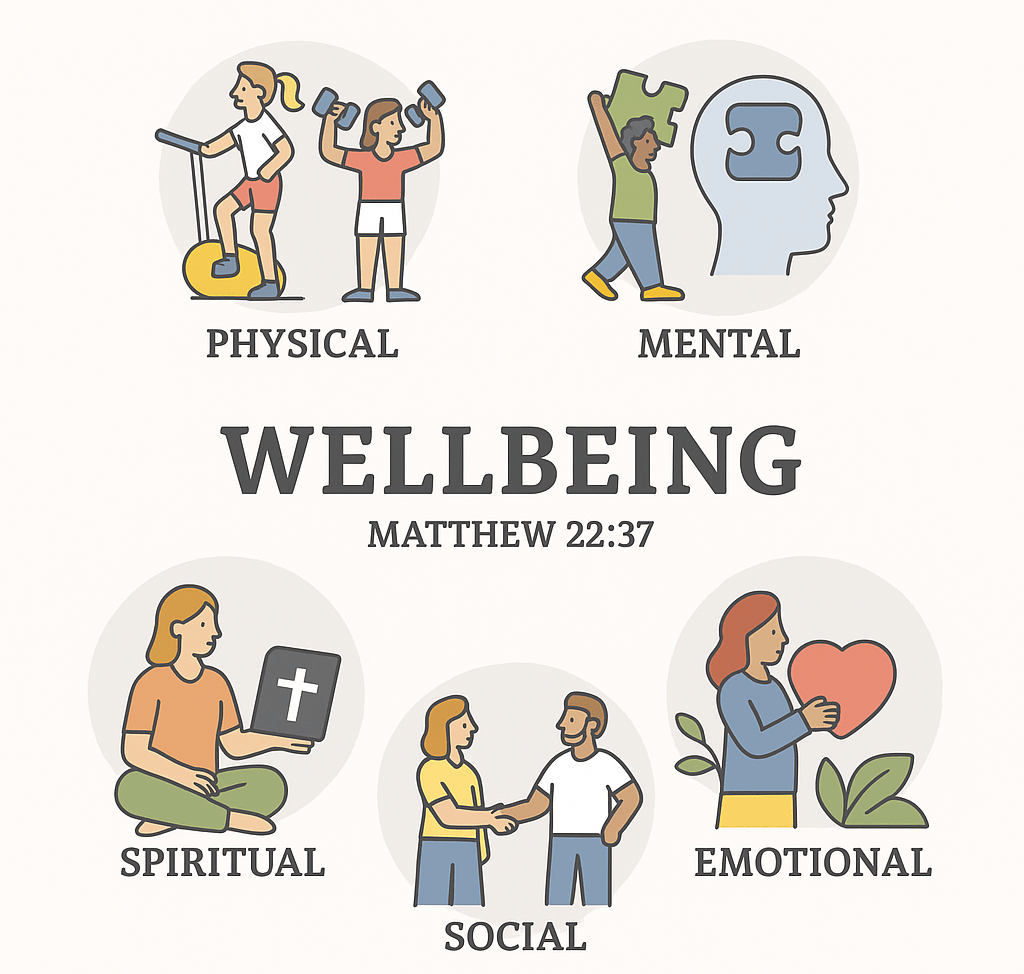
It takes healthy individuals to make a healthy team or organization. A holistic perspective is essential for understanding and measuring individual well-being—or whole-being. True wellness involves the integration of all aspects of a person’s life, not just physical health.
In Matthew 22:37, Jesus reminds us of the complexity of human nature: “Love the Lord your God with all your heart and with all your soul and with all your mind.” This verse highlights that we are multi-dimensional beings—physical, emotional, spiritual, mental, and relational. Because of this, health and wellbeing must be attended to across every domain of life.
Although the concept of holistic health is not new, it remains foundational—particularly for those living or working cross-culturally, where added stressors, transitions, and relational complexities often test an individual’s wellbeing.
Resilience as an Indicator of Health
Resilience—the ability to endure and recover from challenges—is often viewed as a key indicator of wellbeing. It allows individuals to adapt and thrive even in the face of adversity. It is also a reminder of what wellbeing looks like as a developmental, dynamic, communal, and individual trait.
- Resilience is Developmental. It can be grown and strengthened over time through intentional practice, reflection, and supportive relationships.
- Resilience is Dynamic. It is not a fixed personality trait but a living process that changes with experience, environment, and seasons of life.
- Resilience is Communal. It is nurtured in the context of relationships and community.
- Resilience Requires Self-Care. Individuals must learn to care for themselves in each of these areas. Just as airline safety instructions remind us to “put on your own oxygen mask first,” we are designed to serve and give out of a place of rest, renewal, and groundedness—not exhaustion.
Indicators of individual health and wellbeing (signs of flourishing)
- Physical
- Gets adequate sleep most nights. Most healthy adults require 7 or more hours of sleep nightly; regular shortfalls are linked to obesity, hypertension, diabetes, depression, and cardiovascular risk.
- Has a routine of healthy eating. Eating a variety of nutrient-dense whole foods (fruits, vegetables, lean proteins, whole grains, healthy fats) supports metabolic, immune, and cognitive health.
- Exercise frequently (average 30 minutes a day of activity) (Mayo Clinic and WHO).
- Mental and Emotional
- Emotional Awareness & Expression
Recognizes, names, and reflects on one’s emotions (anger, sadness, joy, fear, shame, guilt, etc.).
Can share or express uncomfortable feelings in appropriate contexts (to safe others, therapists, trusted confidants).
Can receive negative feedback or emotions from others and offer space for the mental health of others on their team. - Emotional Regulation & Stress Management
Uses adaptive strategies to regulate mood (e.g., mindfulness, journaling, self-soothing, seeking support).
Does not habitually rely exclusively on avoidance, suppression, or unhealthy coping (e.g., substance misuse, overuse of screens, or overwork).
Maintains psychological “margin”—time, energy, and boundaries to avoid burnout. - Resilience in Adversity: When confronted with prolonged or intense negative emotions (grief, anxiety, guilt, shame, overwhelm), knows effective steps to take (seeking help, reframing, self-care, professional support).
- Sense of Psychological Well‐Being Beyond the absence of pathology, “mental health” includes the ability to cope with life’s stresses, realize one’s potential, and contribute to the community through the support of another’s well-being.
- Emotional Awareness & Expression
- Spiritual (Check this Spiritual Resilience Checklist)
- Has Supportive Relationships with Other Believers. This means regularly connecting with others, either in a church, small group, one-on-one, or virtually.
- Knows and Receives Grace: Openness to both receiving and offering grace, forgiveness, and internalization of spiritual truths rather than merely religious performance.
- Has a Sound Theology of Suffering: Can verbalize why there is suffering in the world, and has a practical faith for how to navigate challenges and difficulties, which includes an appropriate supportive response.
- Spiritual Practices: Engages in regular rhythms and practices of spiritual health (worship, sabbath, community, prayer, confession, lament)
- Relational
- Supportive Relationships & Community
Meaningful connections (2 or more close relationships with believers) that provide emotional support, accountability, encouragement, and shared vulnerability. - Healthy Boundaries & Interdependence
Ability to give and receive in relationships (not entirely self-sacrificing nor isolated), maintain personal boundaries, and engage in healthy conflict resolution.
- Supportive Relationships & Community
Contribution & Reciprocity
Participation in contribution, service, or meaningful giving—being more than merely a consumer of relationships or care.
Providing care and space for someone who is suffering, welcoming the stories of others who are having difficulties and supporting them through time and practical support.
Healthy Team
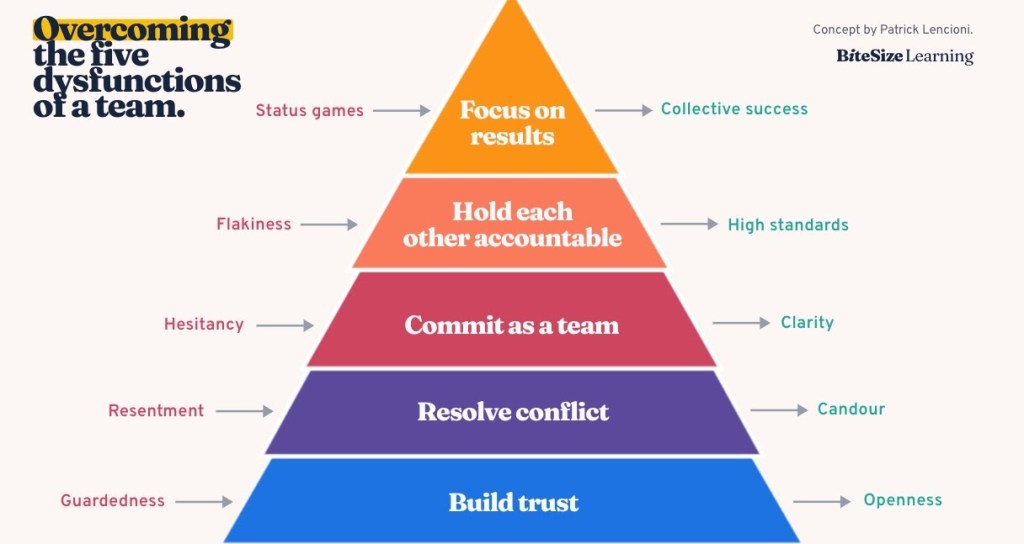
Patrick Lencioni in The Five Dysfunctions of a Team says, A healthy team builds success through five interconnected behaviors. Each layer supports the next, forming a foundation of trust that enables effective collaboration and results. In Culture Code, Daniel Coyle introduces psychological safety as a key indicator of healthy teams.
It represents the freedom in taking interpersonal risks. For example, individuals can speak up, ask questions, share ideas, admit mistakes, and challenge the status quo without fear of punishment, embarrassment, or negative consequences.
1. Trust — The Foundation of Team Health
- Team members are open and vulnerable with one another.
- They willingly admit mistakes, ask for help, and offer honest feedback.
- Vulnerability-based trust allows for authenticity and psychological safety.
2. Conflict — Productive Debate of Ideas
- Healthy teams engage in unfiltered, constructive conflict around ideas and strategies.
- Disagreements are seen as a path to clarity, not a threat to harmony.
- Productive conflict grows out of trust and leads to stronger decisions.
3. Commitment — Clarity and Buy-In
- Once a decision is made, all members commit to it — even if they initially disagreed.
- There is alignment around the team’s purpose, direction, and goals.
- Every member takes collective ownership of the plan and outcomes.
4. Accountability — Mutual Responsibility
- Team members hold each other accountable for performance and behaviors.
- Peer-to-peer accountability reinforces commitment and shared standards.
- This approach is more powerful than relying solely on top-down enforcement.
5. Results — Collective Success Above Individual
- The focus remains on team results, not personal agendas or recognition.
- Success is defined by collective achievement and shared wins.
- Teams celebrate together and maintain motivation through shared purpose.
Healthy Organizations
The larger an organization becomes, the more difficult it is to develop and maintain a healthy culture. Healthy organizations are built on healthy teams—and healthy teams are built on healthy individuals.
As Peter Drucker famously said, “Culture eats strategy for breakfast.”
In other words, the collective attitudes, behaviors, and values of an organization ultimately determine its success more than even the most well-designed strategic plan. Cultivating a “healthy culture” rooted in trust, safety, forgiveness, and support is far more important than producing a polished strategy document on health and well-being. It takes time, patience, and perseverance to develop organizational culture.
Policy, Structure, and Culture that Enable Psychological Safety
- A healthy organization creates and upholds policies and structures that make people feel safe, respected, and valued.
- Clear mechanisms exist for reporting harmful or unethical behavior without fear of retaliation.
- Employees believe their organization “has their back” when they struggle with a person, process, or system. (this idiom means to be prepared and willing to support, protect, or defend that person, especially in difficult situations, similar to how you’d literally stand behind someone to protect their back).
- See: Harvard Business Review – “What Psychological Safety Looks Like in a Hybrid Workplace”
- Also: Amy Edmondson, Harvard Business School – Psychological Safety Overview
Good Organizational Structure and Communication
- Every individual knows who their supervisor is, what their role entails, and what success looks like.
- Communication channels are clear, consistent, and two-way, ensuring that information and feedback flow freely across levels.
- See: McKinsey & Company – “The Organization Blog: Communication and Leadership”
- See also: Gallup – “The State of the Global Workplace” (2024)
Forgiveness and Relational Health
- The organization encourages and promotes giving, experiencing, and knowing forgiveness.
- Leaders model forgiveness and humility, encouraging staff to take responsibility, seek resolution, and move forward.
- Greater Good Science Center – “What is forgiveness” (Even the secular world identifies its value).
Good Organizational Structure and Communication
- People know who their supervisor is, what they are meant to do, and what success looks like.
- The organization encourages and promotes giving, experiencing, and knowing forgiveness.
- The organization encourages a culture of openness, vulnerability, and support as its members deal with their brokenness.
Openness, Vulnerability, and Support
- The organization actively encourages openness, vulnerability, and mutual support as team members deal with personal and professional challenges.
- Teams normalize asking for help, expressing weakness, and offering empathy.
See also: Harvard Business Review – “What Makes a Great Place to Work”

