
What Is Trauma?
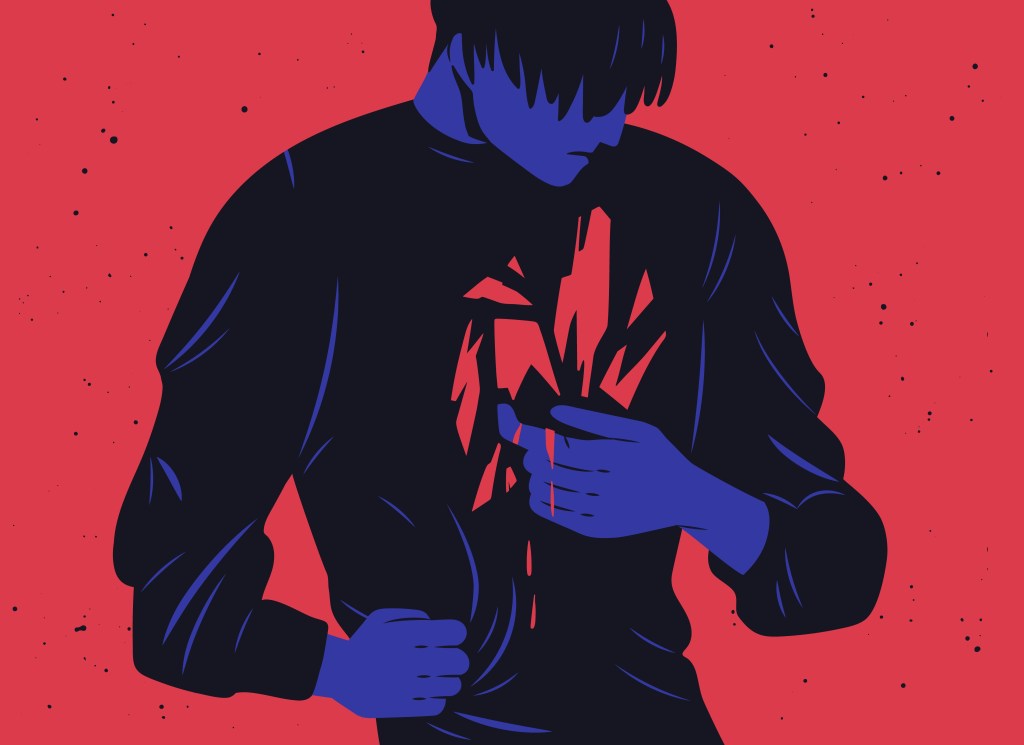
When people hear the word trauma, they often think of a specific event—such as a car accident, war, or natural disaster. However, trauma is not simply the event itself. Trauma is the impact those experiences have on us—on our bodies, minds, relationships, and sense of safety.
Trauma can be understood as a deep wound that affects the whole person. It can leave individuals feeling overwhelmed, disconnected, and unable to cope. It often disrupts relationships, affects physical health, alters thinking patterns, and can even influence spiritual life. Trauma is not rare; it is part of the human experience and can ripple through families, communities, and cultures (Adapted from THI).
As Gabor Maté writes, “Trauma is not what happens to you but what happens inside you.”
How Trauma Affects People
Trauma exists on a spectrum. Some people may experience short-term stress reactions, while others develop longer-term conditions such as Post-Traumatic Stress Disorder (PTSD). Francince Shapiro even talks about small ‘t’ traumas and big ‘t’ traumas to represent the wide scale of both expereinces and impact.
One of the complexities of trauma is that it is subjective. Two people can experience the same event and be affected very differently. What matters is not only what happened, but how the person’s nervous system processed and adapted to it.
Trauma can also affect the body at a biological level. Research suggests that traumatic stress can influence brain functioning, stress hormones, and even gene expression (epigenetics) (Yehuda et al., 2015).
Psychiatrist Bessel van der Kolk describes trauma as:
“Not the story of something that happened back then, but the current imprint of that pain, horror, and fear living inside.”
Healing from Trauma
Trauma can alter how we perceive danger, often leaving the nervous system in a heightened state of alert or, conversely, in shutdown. These changes affect how we think, feel, and respond to the world around us.
What Trauma Is Not
According to Gabor Maté, this is a fairly reliable process-of-elimination checklist. It is not trauma if the following remain true over the long term:
- It does not limit you, constrict you, diminish your capacity to feel or think or to trust or assert yourself, to experience suffering without succumbing to despair or to witness it with compassion.
- It does not keep you from holding your pain and sorrow and fear without being overwhelmed and without having to escape habitually into work or compulsive self-soothing or self-stimulating by whatever means.
- You are not left compelled either to aggrandize yourself or to efface yourself for the sake of gaining acceptance or to justify your existence.
- It does not impair your capacity to experience gratitude for the beauty and wonder of life.”
This perspective helps distinguish between stressful experiences and traumatic imprints.
The Brain and Trauma
Trauma affects how the brain and nervous system function.
- The prefrontal cortex (thinking brain) helps with decision-making and regulation
- The amygdala acts as an alarm system, detecting danger
- The hippocampus helps organize and store memories
- Under traumatic stress, the brain shifts into survival mode—often described as fight, flight, freeze, or fawn. In this state, higher-level thinking decreases, and the body prioritizes immediate survival.
Polyvagal Theory helps explain how the nervous system moves between states of safety, mobilization, and shutdown in response to perceived threat.
Trauma is real—but so is healing.
Recovery often involves helping the brain and body re-integrate traumatic experiences in a way that restores safety and connection. Because trauma affects the whole person, healing typically requires whole-person care.
Therapeutic Approaches
- Trauma-informed therapy (including CBT-based approaches)
- EMDR, which helps reprocess traumatic memories
- Hopefully all counseling approaches will emphasizes safety, relationship, and cultural sensitivity
Body-Based (Somatic) Approaches
- Movement therapy, dance therapy, and yoga
- Practices informed by Polyvagal Theory that regulate the nervous system
Creative and Expressive Therapies
- Art therapy engages both verbal and nonverbal parts of the brain, allowing individuals to process experiences that may be difficult to put into words.
- As Pablo Picasso said, “Art washes away from the soul the dust of everyday life.”
- Creative expression can play a powerful role in healing by restoring connection, meaning, and agency.
- Here is an activity to try using your art form in processing difficult life experiences.
When wounds do not heal on their own, they may remain raw or form protective “scar tissue.” Trauma responses often develop as adaptations for survival. Healing involves gently working with these adaptations so they no longer limit a person’s life.
With time, supportive relationships, and appropriate care, people can experience meaningful recovery. Healing does not always mean forgetting the past—it often means integrating it in a way that no longer controls the present.
Selected References
- What is trauma? A brief overview of trauma and how it impacts an individual.
- Trauma and Art: How creative expresssion can help with healing from the wounds of trauma and an activity to try yourself.
- Crisis Response: This is a page of resources in how to respond to or react after a crisis. This includes basic principels for cross-cultural workers and their families.
- Foundational Books on Trauma
- The Body Keeps the Score — by Bessel van der Kolk
- The Myth of Normal — by Gabor Maté
- Our Polyvagal World — by Stephen W. Porges & Seth Porges
- Clinical & Research-Based Sources
- Substance Abuse and Mental Health Services Administration (SAMHSA) Trauma and Violence
https://www.samhsa.gov/trauma-violence - National Institute of Mental Health (NIMH)
Post-Traumatic Stress Disorder (PTSD)
https://www.nimh.nih.gov/health/topics/post-traumatic-stress-disorder-ptsd - Overview of PTSD symptoms, causes, and treatments.
World Health Organization (WHO)
Doing What Matters in Times of Stress
https://www.who.int/publications/i/item/9789240003927 - Yehuda, R., et al. (2015).
- Substance Abuse and Mental Health Services Administration (SAMHSA) Trauma and Violence
- Therapeutic Approaches & Modalities
- EMDR — by Francine Shapiro
https://www.emdr.com/what-is-emdr/ - Trauma Research Foundation
https://traumaresearchfoundation.org - Somatic Experiencing International
https://traumahealing.org
- EMDR — by Francine Shapiro
- Art Therapy & Expressive Healing
- How Art Therapy Can Help Treat PTSD
- Depictions of Trauma: How Art Can Heal Invisible Wounds
- Malchiodi, C. (2020). Trauma and Expressive Arts Therapy
- Malchiodi, Cathy A. (2020).Trauma and Expressive Arts Therapy: Brain, Body, and Imagination in the Healing Process https://www.guilford.com/books/Trauma-and-Expressive-Arts-Therapy/Cathy-Malchiodi/9781462543111
- American Art Therapy Association
https://arttherapy.org/about-art-therapy/ - Overview of how art therapy supports trauma recovery.
van der Kolk, Bessel (2014). - How Art Heals Trauma (article/interview)
https://www.psychologytoday.com/us/blog/the-body-keeps-the-score/201401/how-art-heals-trauma
- Cross-Cultural & Field-Based Resources
- Covey, James (2023). Trauma-Informed Staff Care in Essentials for People Care and Development
- Headington Institute
https://www.headington-institute.org - The Trauma Healing Institute https://traumahealinginstitute.org
- Additional Helpful Resources
- National Child Traumatic Stress Network https://www.nctsn.org
- Harvard Health Publishing Understanding the Stress Response https://www.health.harvard.edu/staying-healthy/understanding-the-stress-response

